
This post was written by Experiential Education Facilitator Spencer MacLean.“Night hike!”
That was the answer one high school participant gave when I asked, “How do we slow down fear?”
She explained that during our hour-long nighttime hike, she felt her fear gradually shift into joy.
Curious, I asked, “What changed for you?”
She replied, “Halfway through the hike, I thanked my friend for walking with me and holding my hand.”
That simple moment of gratitude allowed the two frightened students to adapt to their surroundings. They began thanking everything around them: the moon for being bright enough to light their path, their teacher for his bad jokes, and the stars for being beautiful.
“It did get colder and darker, and it was still kind of scary,” she admitted, “but the hike and games became more fun as we did more shout-outs.”
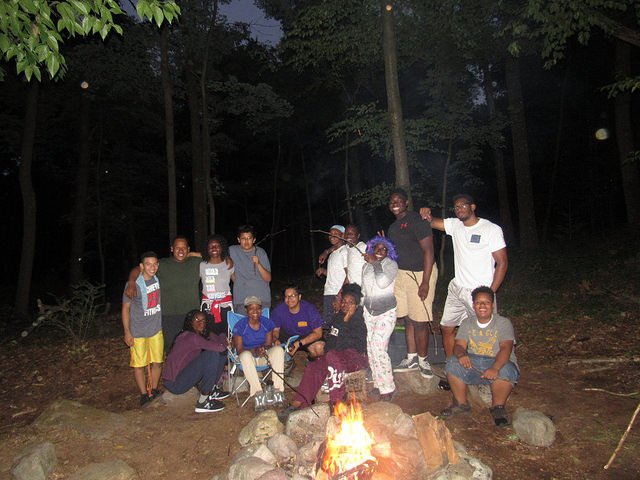
At the Princeton-Blairstown Center, many participants arrive with little or no experience in the outdoors. Bugs, dirt, wildlife, and darkness can feel intimidating or even frightening.
Debriefs like the one after the night hike give students the chance to discover more than just how to navigate an adventure—they help them develop coping skills, such as expressing gratitude, that they can carry home with them.
I also encounter new perspectives every day from the students I work with. As a facilitator at the Center, I love a good debrief. It’s often where the most meaningful insights emerge and where students offer perspectives that deepen my understanding of their experiences.
But this student made me pause and reflect: What is gratitude? How does it shape the way we experience the world? Why is expressing it so powerful?
I kept thinking about her experience, so I dug into the research.
Researchers define gratitude as “the appreciation of what is valuable and meaningful to oneself and represents a general state of thankfulness and/or appreciation.”
Dr. Brené Brown, a social researcher, adds that “the most effective way to cultivate joy in our lives is to practice gratitude. The key word here is practice. It’s not just about feeling grateful; it’s about developing an observable practice. So often we think that joy makes us grateful, when in reality it’s gratitude that brings joy.”
Research supports this: practicing gratitude for just 15 minutes a day, five days a week for at least six weeks can enhance mental wellness, shift perspective, reduce anxiety, and ease symptoms of depression.
Personally, seeing gratitude as a practice can be challenging. The world doesn’t always offer space for continuous gratitude. But with intentionality and reflection, practicing gratitude has begun to feel more natural. My student understood this instinctively. She didn’t just silently appreciate her friend, she voiced her gratitude. That small act led to connection, joy, and even more gratitude.
Her experience aligns with the research: expressing appreciation reduced her fear and anxiety and created space for joy and connection. I remind myself that throughout my own life, practicing gratitude has had the same effect.
What Does Gratitude Look Like at the Princeton-Blairstown Center?
I asked some of our staff this question in the short video below. I wanted to know what they’re grateful for and how they practice gratitude.
At the Princeton-Blairstown Center, we are most grateful for people and the environment. This resonates deeply with me. I hold a belief best expressed by Esther Perel: “The quality of our relationships determines the quality of our lives.”
I’m grateful for the relationships within the PBC community—for the staff, for the participants and teachers who join us, and for our relationship with the natural spaces we learn and grow in.