
Climbing Higher: How Healthy Risks Build Lasting Youth Resilience
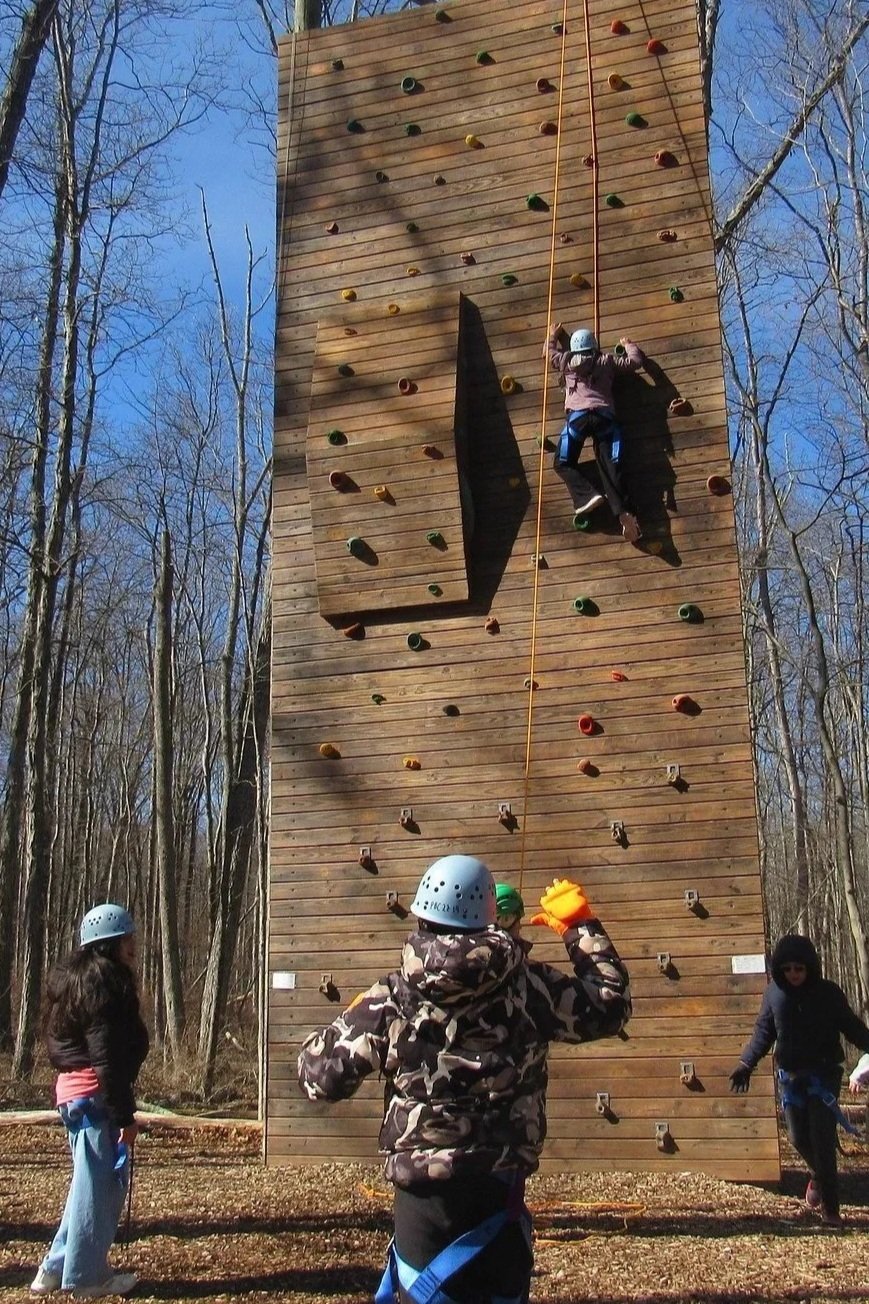
Imagine this: You're climbing a rock wall. One hand goes in front of the other, pulling up and up. Suddenly, you freeze. You can't move. Your hand shakes. The wind makes you feel unsteady. Then, you make the biggest mistake…you look down. Seeing the distance between you and the ground makes you uneasy. But your classmates' cheers motivate you to keep going. Eventually, you reach the top, ring the bell, and feel a sense of accomplishment. Although you felt uneasy, that risk helped you confront your fears head on.
At the Princeton-Blairstown Center, challenge is not about forcing students beyond their limits; it is about helping them discover what they are capable of. Through the Center’s “Challenge by Choice” philosophy, students are encouraged to step outside of their comfort zones in ways that feel supportive and empowering. Whether that is climbing a rock wall, speaking up in a group, or trying something entirely new, healthy risk-taking becomes an opportunity for growth, confidence, and self-discovery.
“At Princeton-Blairstown Center, I learned that I was capable of doing the difficult things and scary things that I once thought impossible,” shared student speaker Ronald Clemens during the 2026 Soirée Under the Stars.
For many young people, experiences like these become defining moments. Research on adolescent development shows that positive risk-taking includes socially acceptable challenges such as trying out for a team, enrolling in a tough class, public speaking, or making new friends. These risks help young people’s well-being and growth, even if the outcome is uncertain.
At Princeton-Blairstown Center, these moments happen every day through experiential outdoor education. Students are challenged physically, mentally, and emotionally, but always within an environment rooted in encouragement and support. Our “Challenge by Choice” philosophy allows students to decide how they want to engage with an activity without unhealthy pressure from peers or adults.
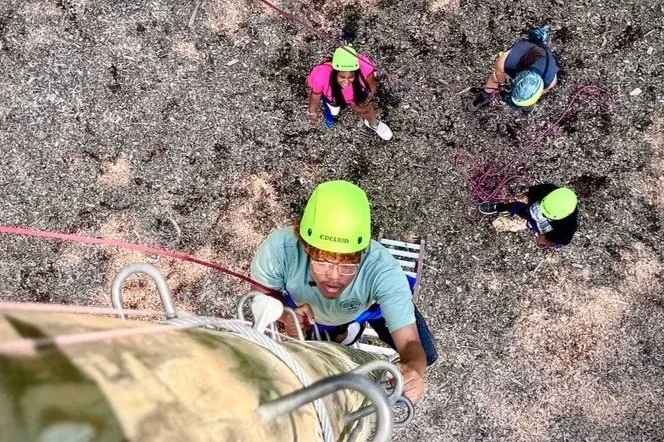
LIT Ronald Clemens on the high ropes course
As described in Maeve Denshaw's article “Challenge by Choice for Youth Outdoors,” outdoor education often operates within what educators call the growth zone. The comfort zone is where students feel safest and most familiar. The panic zone is where stress and fear become overwhelming. In between lies the growth zone where students feel challenged, yet still in control enough to learn and succeed. It is within this space that growth occurs, and where healthy risks can pay off.
Ronald Clemens reflected on this feeling when sharing about a camping trip at the Princeton-Blairstown Center. He said, “I learned that being out of your comfort zone IS the entire point, because that is where you grow the most. That camping experience taught me something important about myself: I'm adaptable, and that is a skill that matters because in life, you never know what challenges or environments you'll be placed in.”
Healthy challenges can help adolescents build confidence, social competence, perseverance, and self-regulation. When students are given supportive opportunities to take risks, whether climbing a high ropes course, speaking in front of peers, or working through a team challenge, they learn how to navigate uncertainty in productive ways.
At the Princeton-Blairstown Center, facilitators work intentionally to create spaces where students feel supported enough to try. Some students may climb to the very top of the rock wall while others may simply step off the ground. Both experiences are valuable because growth looks different for everyone.
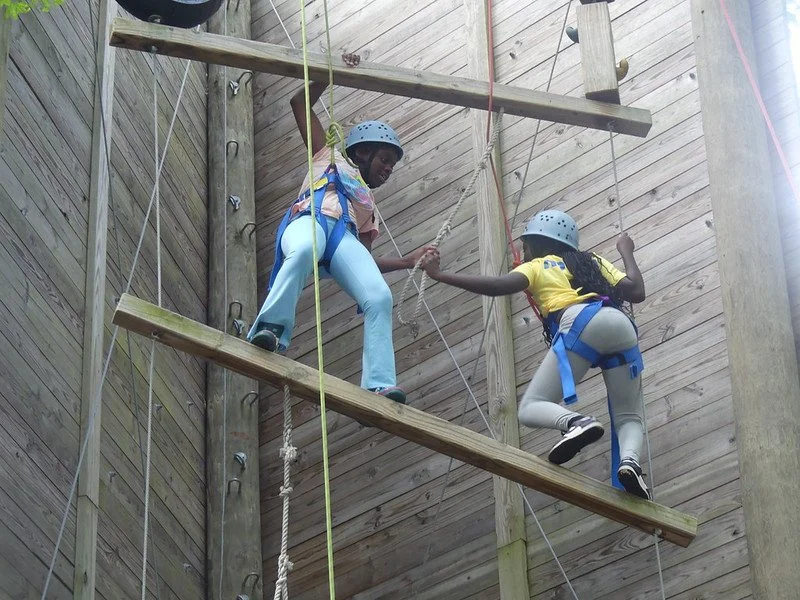
The true power of “Challenge by Choice” lies in helping students realize that courage is not the absence of fear. Courage is deciding to try anyway.
For Ronald and so many others, those moments of uncertainty become moments of transformation. The lessons learned outdoors extend far beyond the trails and climbing walls; they become reminders students carry into classrooms, relationships, careers, and future challenges.
Sometimes growth begins with something as simple as ringing a bell at the top of a wall and realizing you were capable all along.